
Quality Improvement Proposal
Quality Improvement (QI)
Background
In this section, you will introduce an issue from practice that requires improvement. This must be something that is a common problem encountered in practice and that you as a newly qualified nurse could do something about. It is important to include a rationale for selection of the topic, justifying why the problem you have chosen is important. You can consider importance from the position of impact upon healthcare and which domain(s) of quality the proposal will impact on. To conclude the section, you will provide a clear problem statement.
Identifying Problem
In this section, you will present a summary of the underlying causes of your problem and identify what is already known about the problem and potential solutions from the evidence base. This section does not constitute a systematic search of the literature but should identify what is already known about your topic and key texts to support your proposal. Undertake a systems-based approach to analysing the problem throughout
• Use a tool appropriate to the problem to evaluate the underlying causes of your chosen problem in more detail, (e.g. root cause analysis, process mapping or another suitable tool covered on day 1 of the
module)
• Frame a question using PICO or PEO to identify appropriate literature that supports your analysis and will help you to critically analyse potential quality improvement solutions
• Conduct and critically discuss the findings of your evidence scan
• The evidence you present must be relevant to the problem you are trying to solve and may be drawn from the following sources of information:
QI Measures
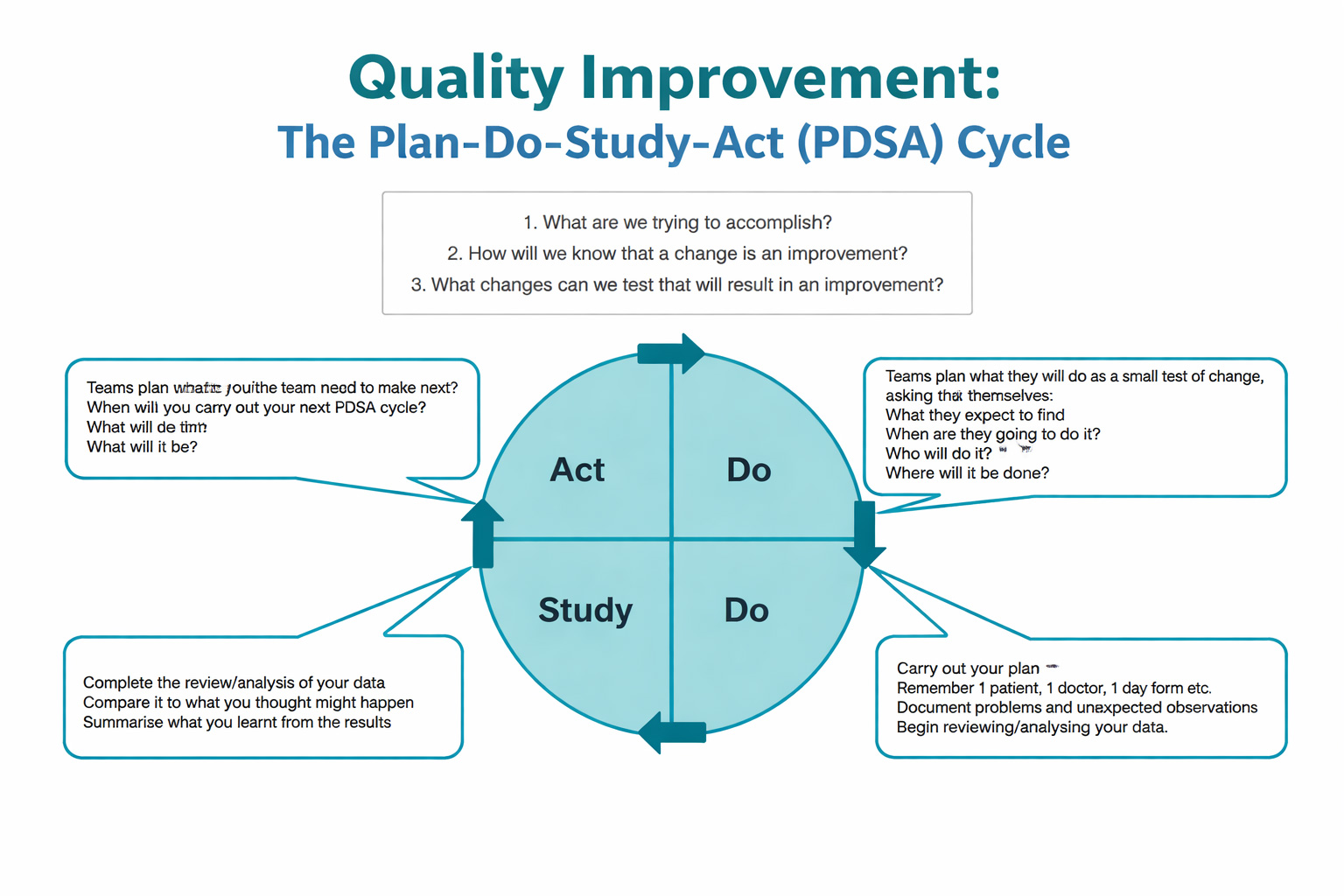
· Identify the QI methodology that will be used; for example, the Institute for Healthcare Improvement (IHI) Model for Improvement. The IHI Model for Improvement asks three questions, the first question should be answered here if using this model.
· Present a SMART Aim for the proposal.
QI Desing and Plan
This section asks you to design and plan your quality improvement. The IHI Model for Improvement asks three questions, the second and third questions should be answered here if using this model. In this section you
must:
• Identify and critically appraise the measures for the SMART Aim, considering how this data might be obtained (including the importance of collecting baseline data)
• Identify and critically evaluate how data will be used (displayed & analysed)
• Demonstrate an understanding of using data for improvement vs. using data for other purposes (such as research or audit).
• Consider any ethical dimensions to your QIP and how you would obtain approval for a QIP
• Apply learning from the Introduction and Background sections to develop a rationale for planned small tests of change. A driver diagram must be included here that includes the SMART Aim, primary drivers, secondary drivers and ideas for small tests of change.
QI Pilot and Implement
This section describes what you are proposing to do: where, when, who, how, etc. in order to achieve your project aim and objectives. In this section you must:
• Use the Plan, Do, Study, Act (PDSA) phase of the IHI Model for Improvement to critically evaluate how you would pilot and implement one small test of change that has been identified on the driver diagram, including why this might be tested first
• Identify any additional measures you might want to consider to evaluate the effectiveness of your PDSA cycle.
QI Sustain & share
This section describes who you will need to involve in your proposal, how you might communicate to engage them and what some of the barriers and facilitators of change might be in relation to your QIP. In this section you must:
• Include a stakeholder analysis, critically evaluating how you might communicate with different stakeholders to engage them in your QIP
• Identify one theory of change management and apply this to your QIP to critically appraise some of the potential barriers and facilitators of change.
Summary and Conclusion
This concluding section should include a summary of QI as a methodology to improve quality in healthcare. This section should also include an outline of what you have learned from this process including barriers and facilitators to change within clinical practice. Your conclusion should include a statement of how the proposed project might impact quality issues in the chosen setting if it were implemented.