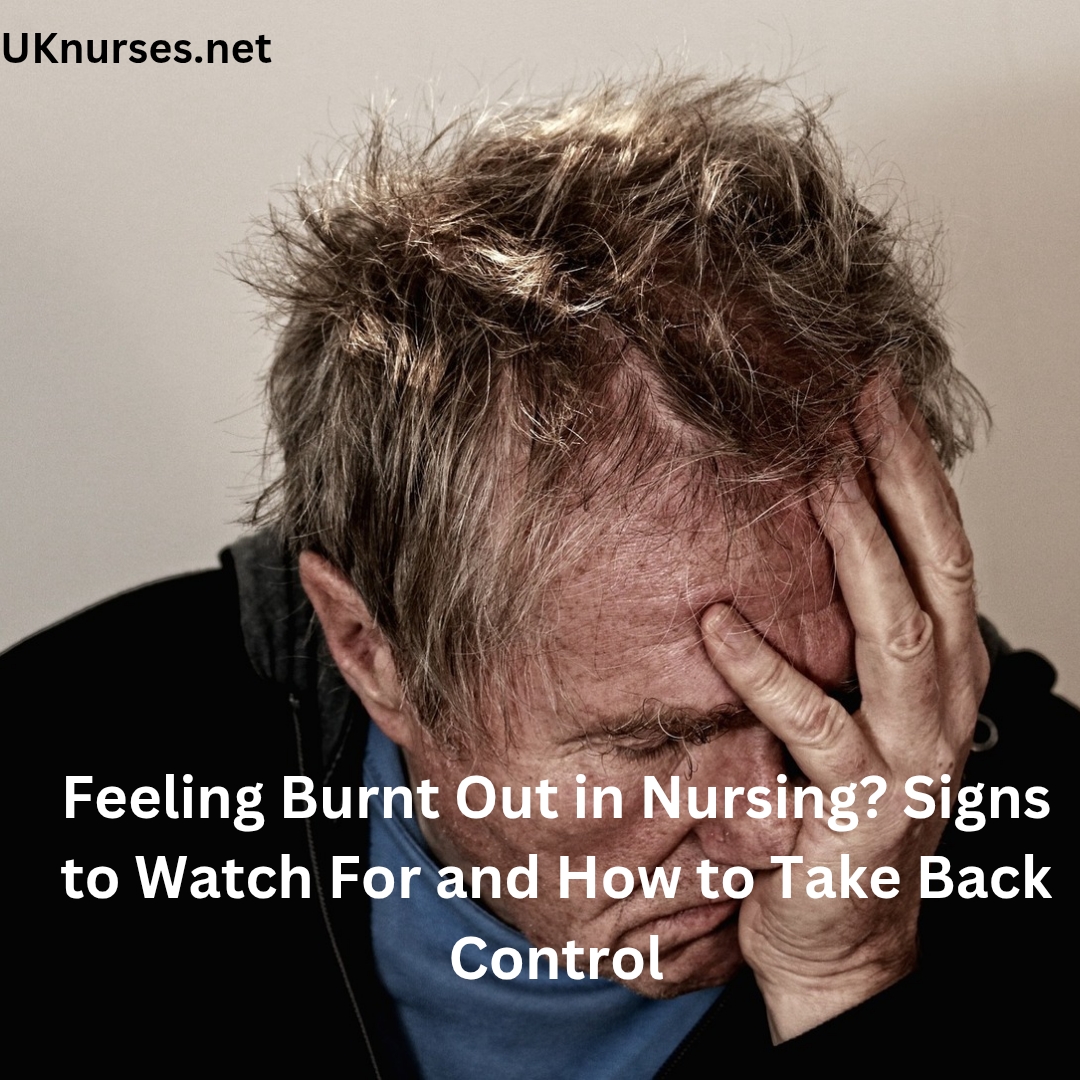
Burnout in nursing rarely happens all at once. It often builds quietly, one busy shift after another, until even the work you care deeply about starts to feel heavy.
You may notice it in small ways first. Feeling drained before your shift begins. Sitting in your car after work and struggling to switch off. Snapping over little things at home. Forgetting simple tasks. Wondering why you feel exhausted doing work you once handled with confidence.
For many nurses, burnout does not feel dramatic. It can feel like numbness, frustration, brain fog or constantly running on empty. Nursing often teaches you to keep going, even when your own energy is low, which makes the warning signs easy to miss.
If you have been feeling burnt out in nursing, you are not alone. This guide will help you recognise the signs, understand the causes and find practical ways to take back control.
Absolutely. I tightened the flow, cut repetition, and kept the UKNurses tone:
What Is Nursing Burnout and Why Does It Happen?
Burnout is not the same as feeling tired after a long shift. Everyone feels tired. Burnout is deeper than that. It builds slowly over time and, for many nurses, it can go unnoticed for months before the signs feel impossible to ignore.
The World Health Organization describes burnout as an occupational phenomenon caused by chronic workplace stress that has not been successfully managed. It usually shows up in three ways:
-
Emotional exhaustion
-
Feeling detached from your work
-
A growing sense that you are no longer as effective as you once were
Nursing is one of the professions most affected by burnout, and the reasons are clear. A 2023 Royal College of Nursing survey found that 56% of nursing staff felt unable to provide the standard of care they wanted to deliver. NHS data also continues to show that stress and mental health concerns are among the leading causes of sickness absence for nursing staff across the UK.
The demands of nursing are intense. You care for frightened patients and support grieving families while staying clinically focused under pressure. You work long shifts, rotating days and nights, often in understaffed environments where patient needs can feel greater than the time and resources available. Many nurses carry that pressure quietly and keep telling themselves they are coping.
The COVID-19 pandemic added even more strain to an already stretched workforce. For many nurses, the emotional and physical impact has not fully gone away.
Burnout in nursing is not a personal weakness. It is often a very human response to carrying too much for too long in conditions that feel unsustainable. Understanding that matters, because nurses are often the last people to recognise when they need support themselves.
Burnout vs. Stress
Many nurses dismiss burnout as stress. But stress is expected, but burnout is unexpected.
But the two experiences are different, as shown in the table below.
|
Stress in Nursing |
Burnout in Nursing |
|
|
How it feels |
Intense, pressured |
Empty, flat |
|
Duration |
Often short-term |
Builds gradually |
|
Motivation |
You still feel driven |
Motivation is gone |
|
Effect of rest |
Usually helps |
Often not enough |
|
Emotional state |
Overwhelmed but engaged |
Detached, hollow |
Stress usually eases when pressure eases.
Burnout often persists even after time off, because it is not caused by one difficult week. It is caused by months of insufficient recovery between demands.
Burnout vs Compassion Fatigue
These two get mixed up often. They overlap, but they are not the same.
Burnout is driven primarily by systemic and workload factors such as:
-
Understaffing
-
Poor management support
-
Unsustainable patient ratios
-
Chronic overextension.
Compassion fatigue is driven by the emotional cost of caring itself. It is what happens when sustained empathic engagement with suffering depletes your emotional reserves.
Here is a real-world way to picture the difference.
Two nurses on the same oncology ward, after a difficult month of end-of-life cases. Nurse A still cares deeply about her patients but leaves every shift feeling hollowed out, unable to feel much at all. That is compassion fatigue. Nurse B feels nothing. She resents being at work, has stopped attending team huddles, and snaps at anyone who speaks to her. That is burnout.
Both are serious. Both deserve support. But the recovery paths are different.
Compassion fatigue often responds to rest, peer support, and processing difficult experiences.
Burnout usually requires addressing the systemic conditions driving it and, sometimes, involving significant time away from clinical practice.
Unfortunately, many nurses experience both simultaneously.
Why Nurses Often Ignore Burnout Until It Is Serious
Nursing culture makes burnout worse by making it harder to admit.
Nursing attracts people driven by service and sacrifice. The same qualities that make someone an exceptional nurse — putting others first, pushing through difficulty, finding meaning in caring for people at their most vulnerable — are the same qualities that make it extraordinarily hard to say out loud: I am not okay.
There is social pressure, too. Chronically understaffed wards depend on everyone quietly coping. The nurse who admits she is not coping disrupts a system built on that quiet compliance. That pressure is real and powerful.
There is guilt. If you feel burned out, part of your mind will tell you that your patients need you, that your colleagues are struggling too, that you do not have the right to fall apart. That voice is wrong. A nurse who is burning out is not serving her patients well. Carrying on until you break is not a gift to anyone.
And there is the language barrier. "Tired" is familiar. "Burned out" can feel dramatic, clinical, like something that happens to other people. Naming it accurately matters. You cannot address what you have not acknowledged.
Remember, burnout always creeps in. Here is what to watch for, across every area of your life.
|
Category |
Signs to Watch For |
|
Emotional |
Exhaustion, detachment from patients, cynicism, dreading shifts, feeling trapped |
|
Physical |
Chronic fatigue, frequent illness, headaches, insomnia, physical tension |
|
Behavioural |
More sick days, withdrawing from colleagues, more errors, skipping CPD |
|
Cognitive |
Brain fog, poor concentration, forgetting things, inability to switch off |
|
Relational |
Irritability at home, cancelled plans, losing interest in activities you used to enjoy |
Signs of Burnout in Nursing You Should Not Ignore
The tricky thing about burnout is that its early signs look almost identical to ordinary nursing tiredness. That is exactly why so many nurses miss it until it has become something much harder to recover from.
Here are the signs to watch for:
1. Feeling Emotionally Drained Before Your Shift Even Starts
You wake up already heavy. Not tired in the way a good sleep might fix. Heavy in a way that settles in your chest before your alarm has finished going off.
Sarah, a Band 6 community nurse in Manchester, described it this way. "I used to get a small buzz on my way to work. Not every day, but most days. When that disappeared and I started waking up already exhausted before I had done anything, I should have recognised it sooner than I did."
This flatness before the shift begins is one of the earliest and clearest signals that something has moved beyond ordinary tiredness.
2. Dreading Work in a Way That Does Not Lift
Every nurse has shifts they would rather not face. A difficult patient, a short-staffed ward, or a complicated admission. That is normal, but what burnout looks like is different.
It is the dread that does not lift even after a shift goes well. It is lying in bed the night before a shift running through every possible reason to call in sick.
James, an adult nurse working on a busy surgical ward in Birmingham, described reaching a point where he could not sleep the night before every single shift, not because anything specific was waiting for him, but because the prospect of going in at all felt overwhelming. That persistent, unrelenting dread is burnout.
3. Feeling Detached From Your Patients
This one tends to disturb nurses the most, because it cuts right to the heart of why most of them chose the profession.
You are completing tasks, documenting and handing over. You are doing the job, but the genuine connection that used to come naturally, the moment when you noticed a patient was frightened before they said anything, the instinct to sit for a minute when someone needed company, has gone quiet.
Anika, a children's nurse in Leeds, put it simply. "I knew something was really wrong when I stopped caring whether the children were scared. I still did everything correctly. But I was not there with them the way I used to be. I was just ticking boxes and it horrified me."
This emotional detachment is one of burnout's most characteristic signs. It is not cruelty. It is the emotional immune system protecting itself by shutting down.
4. Snapping at Colleagues or Family Over Small Things
Burnout erodes your emotional regulation long before your clinical competence. You snap at things that would not normally register. A routine question from a colleague feels like a challenge. Someone asks how your day was and the question itself irritates you.
At home it is worse.
People who know you best bear the brunt of the irritability you have been containing all shifts. Partners, children and friends absorb the overflow without understanding what they are dealing with.
For instance, Marcus, a mental health nurse in Cardiff, described the moment he realised something was wrong. "My daughter asked me to help with her homework and I felt this flash of anger I could not explain. She was eight. She just wanted help with maths. I sat in the bathroom afterwards and cried because I did not recognise myself."
5. Trouble Sleeping Even Though You Are Exhausted
Your body is running on empty. But your mind stays on shift.
You lie down, and the ward follows you. Patient conversations replay. Clinical decisions get second-guessed. Handover details loop. You eventually drift off and then wake at three in the morning with your heart racing, your nervous system still standing guard long after you have left the building.
This disrupted sleep pattern is not insomnia in the traditional sense. It is a nervous system that has been in hypervigilance for so long it no longer knows how to stand down. And the cruel irony is that the rest you most desperately need is the thing burnout makes hardest to access.
More signs of burnout in nursing:
-
Brain fog and forgetting simple things
-
Frequent headaches or persistent body tension
-
Feeling like nothing you do is ever enough
-
Pulling away from the people you care about
-
Crying unexpectedly or feeling completely numb
-
Questioning whether nursing is still right for you
Are You Burning Out? A Practical Self-Assessment
Disclaimer: This is a reflective tool, not a diagnosis. Use it honestly and privately.
Score each statement:
-
0 = Not at all
-
1 = Sometimes
-
2 = Often
-
3 = Almost always
Please answer this assessment as honestly and accurately as possible. Your responses will help you better understand your situation and ensure you receive the most appropriate support, guidance, and resources for your needs.
-
I feel emotionally drained at the end of most shifts, not just the hard ones.
-
I dread going into work in a way that feels different from ordinary pre-shift nerves.
-
I feel detached from my patients or disconnected from their experiences.
-
I find it difficult to switch off from work on my days off.
-
I have been sleeping poorly despite feeling exhausted.
-
I have been more irritable or short-tempered than usual.
-
I feel like my efforts at work are not making a difference.
-
I have been withdrawing from colleagues, friends or family.
-
I have had more physical symptoms than usual — headaches, tension, illness.
-
I have questioned whether I still want to be in nursing.
What your score means:
-
0–9: Low risk. Build recovery habits now, before pressure builds further.
-
10–19: Moderate risk. This is the time to act. Read the practical section below and speak to someone you trust.
-
20–25: High risk. Speak to your GP or occupational health team this week.
-
26–30: Please contact your GP today. You can also contact the Samaritans on 116 123 — free, confidential, 24 hours. If you are an NHS nurse in the UK, the NHS Practitioner Health Programme (practitionerhealth.nhs.uk) provides specialist, confidential mental health support for healthcare professionals.
If you scored in the high risk or immediate support categories, please use those resources before reading further.
What to Do If You Are Experiencing Burnout: A Step-by-Step Plan
Step 1: Name it
Say it clearly to yourself: I am burned out. Not "a bit tired." Not "just stressed." Naming it accurately changes how you respond to it.
Step 2: Tell one person
You do not need to make an announcement. Just tell one person who knows you well. A partner, a trusted colleague, or a friend. Saying it out loud breaks the isolation that burnout depends on.
Step 3: Book a doctor's appointment this week
Not next month, this week. Your doctor can assess your physical and psychological health, refer you to appropriate services, and provide documentation if you need time off. This is a legitimate medical appointment.
Step 4: Contact occupational health
If you are an NHS employee, your trust has an occupational health service. Most allow self-referral. Occupational health understands clinical work in ways that general healthcare may not. They can provide confidential support, recommend workplace adjustments, and help you think through your options without triggering a formal management process.
Step 5: Use your leave and actually rest
Annual leave spent catching up on errands is not recovery. You need time that is genuinely yours. Two consecutive days away from anything work-adjacent makes a measurable difference. Take the leave you are owed.
Step 6: Protect your breaks at work
This is harder than it sounds in understaffed environments. But working through breaks, staying late and accepting additional shifts when you are already burned out does not make you a better nurse. It makes burnout worse and increases clinical risk. Take your breaks.
Step 7: Speak to your line manager honestly
A one-to-one conversation about workload pressure, with specific examples, is more likely to produce change than suffering in silence until you reach crisis. Many managers need to hear clearly what is happening at ground level. Some of them are waiting to be told.
Step 8: Consider whether you need professional support
Some nurses need counselling or therapy. Some need a change of ward or clinical environment. Some need significant time away from practice. Be honest with yourself about what you actually need, not just what feels most manageable to ask for.
4 Practical Recovery Strategies That Actually Fit Nursing Life
Recovery from burnout is not about bubble baths and breathing exercises. It is about sustainable, structural changes to how you protect your energy.
1. Journaling After Shifts
You do not need a leather-bound notebook. Five minutes and a phone are enough.
The goal is processing, not documentation. Unprocessed emotional content from clinical work loops through your mind at 2 am. Externalising it, writing or speaking it out, reduces that load.
Try these four easy prompts:
-
What felt heavy today?
-
What went well, even if it was small?
-
What can I leave at work until tomorrow?
-
What do I need right now?
If writing feels like too much, try a two-minute voice note in the car park before driving home. Same outcome, less effort.
2. Micro-Recovery Moments During Shifts
You cannot always control your break. But you can create small resets throughout the shift.
For instance, three slow breaths before entering the next bay. A stretch between tasks. Thirty seconds outside a ward door. These are not wellness gestures. They are brief interruptions to the physiological stress response that prevent it from building to an unmanageable level by the end of the shift.
3. Protect One Thing Outside Nursing
Burnout destroys life outside work first. Exercise disappears, plans get cancelled and hobbies feel like obligations.
So, identify one thing that is yours: a walk, jog, pilates, church, music, reading, dinner with people you love and protect it like a clinical shift. It is not self-indulgent. It is what keeps you functional.
4. Reduce the Invisible Overload
Burnout is not only caused by clinical work. The invisible load of adult life like meals, errands, admin, and family logistics, compounds clinical exhaustion in ways that are easy to underestimate.
But you can start:
-
Meal prepping once a week
-
Batching errands
-
Simplifying routines
-
Asking for help earlier
None of the above are small. They are meaningful reductions in the total cognitive load you are carrying outside the ward.
When You May Need to Step Back From Nursing
Some nurses will need significant time away from clinical practice. This is not failure. It is often the right clinical decision for your own health.
Signs that you may need time away include:
-
Making errors that are out of character for you
-
Feeling unable to respond appropriately to patient distress
-
Experiencing intrusive thoughts related to clinical work
-
Having mental health that has been deteriorating for months despite everything you have tried.
Taking sick leave for burnout is legitimate; it's not a failure or a sin. A nurse who is burning out is not safer for patients than a nurse who is temporarily absent and recovering.
Phased returns, supported by occupational health, are common and well-established in the NHS. Some nurses return to a different ward or clinical setting and find it transforms their relationship with nursing. Moving from acute care to primary care, community nursing, or a teaching role is not giving up. It is finding the version of nursing you can sustain.
Remember, your relationship with nursing does not have to end because your relationship with a particular environment became untenable.
Support Resources for Nurses Experiencing Burnout
|
Resource |
What It Offers |
|
Confidential mental health support for NHS staff |
|
|
Wellbeing support, counselling and peer support |
|
|
24-hour confidential listening service |
|
|
Union support and advocacy for nursing members |
A Note on Student Nurses and Burnout
Student nurses are not immune to burnout. The demands of nursing education — clinical placement hours, academic deadlines, financial pressure, and personal life — create conditions where burnout can develop before a nurse has even qualified.
You may not feel entitled to raise concerns on placement. You may fear that admitting struggle will affect your academic progression. The imposter syndrome of being a student in a professional environment makes asking for help harder than it should be.
Burnout in student nurses often presents first as academic withdrawal — missing deadlines, losing interest in learning that previously felt meaningful, feeling unable to engage during placements. It can look like poor performance long before it looks like burnout.
If academic pressure is part of what you are carrying, reducing that specific load makes the whole picture more manageable.
At UKNurses, we support nursing students and nurses across the UK, Australia, Africa and New Zealand with practical academic guidance built by nurses who understand the pressure firsthand. Sometimes reducing pressure in one area is what makes the rest of the journey sustainable.
Book an appointment with UKNurses
FAQs About Burnout in Nursing
-
What is the difference between burnout and being tired?
Tiredness lifts after rest, burnout does not. If you take time off and still feel emotionally drained, detached and unable to re-engage with your work, that is burnout, not tiredness.
-
Can you fully recover from nursing burnout?
Yes. With the right support, adequate rest and appropriate intervention, most nurses recover fully. Early action makes recovery significantly faster.
-
How long does recovery take?
It varies. Mild to moderate burnout can begin to lift within weeks with the right changes. More severe burnout may take months, sometimes including significant time away from clinical practice.
-
Should I tell my employer that I am experiencing burnout?
You are not required to disclose burnout to your employer unless you choose to. Many healthcare organizations offer confidential support services that you can access independently. If you're unsure about what to share, seek advice from your professional nursing association, union, or employee support program to understand your options and rights.
-
Will burnout affect my NMC registration?
Burnout itself does not affect your registration. If you are worried about fitness to practise, speak to the RCN or a legal advisor for guidance specific to your situation.
-
Can student nurses burn out?
Absolutely. Balancing placements, academic work, financial pressure and personal responsibilities while building clinical confidence is an enormous and underacknowledged task.
-
Is it normal to think about leaving nursing when burnt out?
Very common. Thoughts of leaving during burnout do not necessarily mean nursing is wrong for you. Many nurses who consider leaving recover with support and return to work they love.
-
What should I do if a colleague seems to be burning out?
Say something. Privately, gently: "I've noticed you seem really stretched lately and I wanted to check in." You do not need to solve it, but asking the question and creating space for an honest answer can make a real difference.